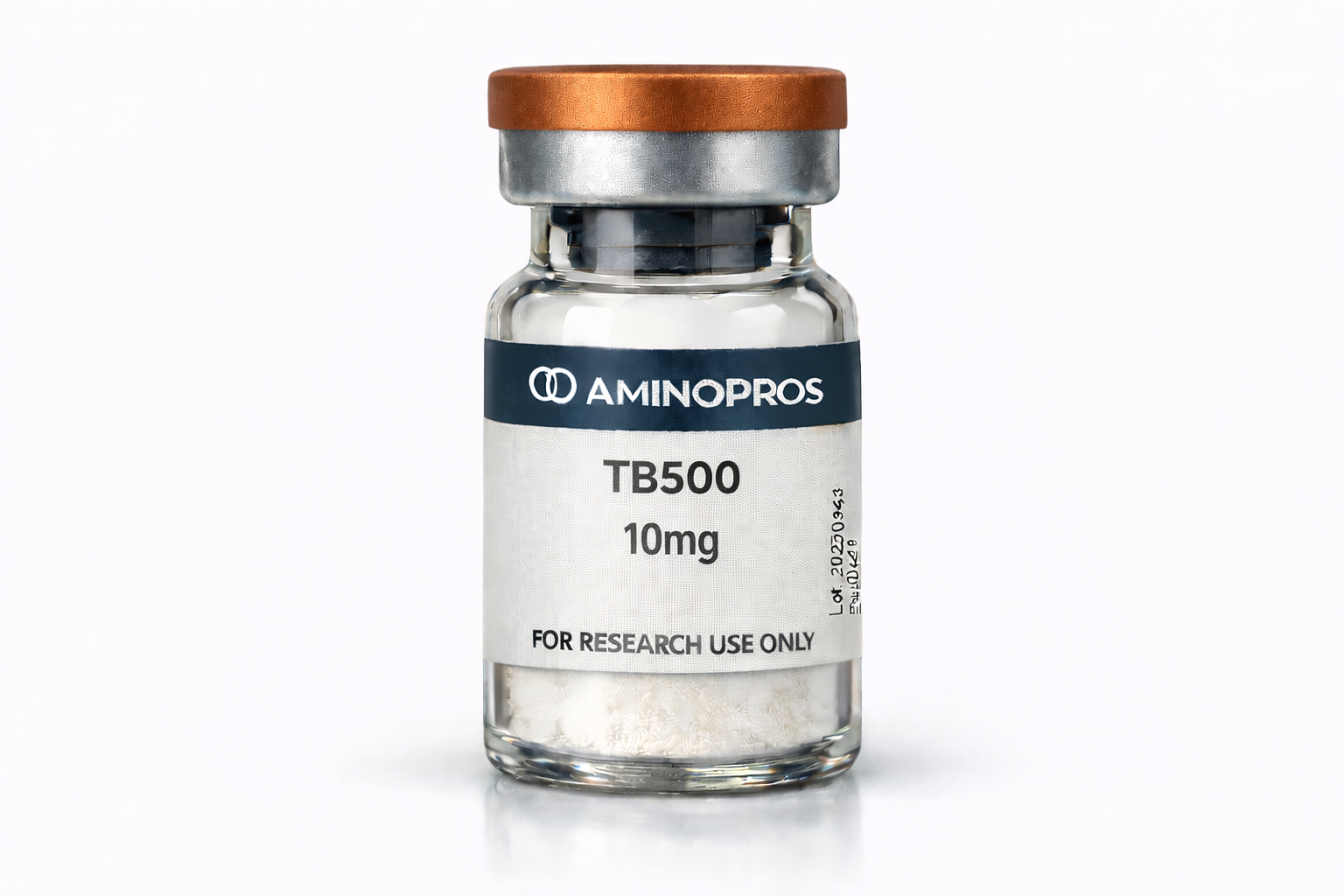
TB500 10MG (D)
0Researcher Reviews
Rated 5 out of 5
$75.00 Original price was: $75.00.$65.00Current price is: $65.00.
Third-Party Verified Test Report
This product has been independently analyzed for identity and purity.
TB-500 10mg research peptide is a synthetic thymosin beta-4 fragment studied for its role in cellular migration, tissue repair signaling, and angiogenesis pathways, with research applications focused on regeneration models, cytoskeletal activity, and recovery-related biological processes under controlled laboratory conditions.
For Research Use Only
TB-500 10mg
Lyophilized peptide • Laboratory research material • Not for human or veterinary use
TB-500 10mg research overview
TB-500 10mg research peptide is a synthetic fragment of thymosin beta-4, a naturally occurring peptide involved in cell migration, tissue remodeling, and actin regulation. In laboratory settings, TB-500 is commonly studied for its potential influence on cellular regeneration pathways, angiogenesis, and structural repair signaling across controlled biological models.
Research involving TB-500 10mg often focuses on its ability to regulate cytoskeletal organization through actin-binding mechanisms, which play a critical role in cellular movement and tissue reconstruction. These properties make it particularly relevant in experimental environments analyzing recovery-related biological responses.
The peptide is also examined in studies involving wound healing models, muscle tissue repair, and vascular development. Its involvement in angiogenic signaling pathways allows researchers to evaluate how new blood vessel formation may support broader regenerative processes within structured laboratory conditions.
The lyophilized presentation of TB-500 10mg research peptide ensures stability, accurate measurement, and consistent preparation, making it suitable for controlled experimental workflows where reproducibility and precision are essential.
Key Research Points
- Thymosin beta-4 fragment studied for cellular repair and regeneration
- Explored for angiogenesis and vascular development research
- Investigated for actin regulation and cytoskeletal organization
- Relevant in tissue remodeling and wound healing models
- Supports cellular migration and structural recovery signaling
TB-500 laboratory applications
TB-500 10mg research peptide is widely utilized in laboratory environments focused on tissue repair pathways, cell migration behavior, and angiogenic signaling models. These applications allow researchers to evaluate how biological systems respond to structural damage and recovery-related stimuli under controlled experimental variables.
It is also commonly studied in musculoskeletal research models, including those involving muscle fibers, tendon structures, and connective tissue environments. These structured studies help provide insight into how peptides may influence regenerative processes at the cellular level.
TB-500 is frequently examined alongside other compounds in research involving multi-pathway recovery systems, where cellular signaling, inflammation modulation, and tissue repair mechanisms are evaluated together in controlled laboratory settings.
Extended TB-500 research notes
Additional research into TB-500 10mg research peptide includes its role in cellular differentiation, structural protein regulation, and biological repair signaling. These areas of study are essential for understanding how tissues adapt and recover under various experimental conditions.
Studies often examine TB-500 in relation to actin filament dynamics, which influence cell shape, movement, and structural stability. This makes it particularly relevant in research involving cellular organization and biomechanical response systems.
In more advanced laboratory protocols, TB-500 is evaluated for its interaction with angiogenic factors, extracellular matrix signaling, and tissue reconstruction pathways, contributing to a broader understanding of regeneration-focused biological environments.
The standardized format allows for consistent integration into structured research workflows where precise measurement, repeatability, and controlled experimental design are critical to achieving reliable analytical results across all study phases.
Form
Lyophilized Powder
Content
10mg per vial
Appearance
White to off-white lyophilized powder
Storage
Refrigerate 2–8°C or store below 25°C dry
Explore more in our research peptide collection.
For additional research context, review studies on
PubMed.
Disclaimer: For laboratory research use only. Not approved for human or veterinary use.
Additional research involving TB-500 10mg research peptide continues to expand across
cellular regeneration models, angiogenesis pathways, and
tissue remodeling environments. Researchers utilize TB-500 in controlled studies to evaluate
its role in actin regulation, cell migration behavior, and
structural repair signaling across various biological systems. Its consistent lyophilized format
supports repeatable experimental conditions and structured laboratory workflows.
For additional research compounds, explore our
peptide research collection.
For published scientific literature and ongoing studies, review
PubMed research database.