RETATRUTIDE 60MG (T)
0Researcher Reviews
Rated 5 out of 5
$427.99
Third-Party Verified Test Report
This product has been independently analyzed for identity and purity.
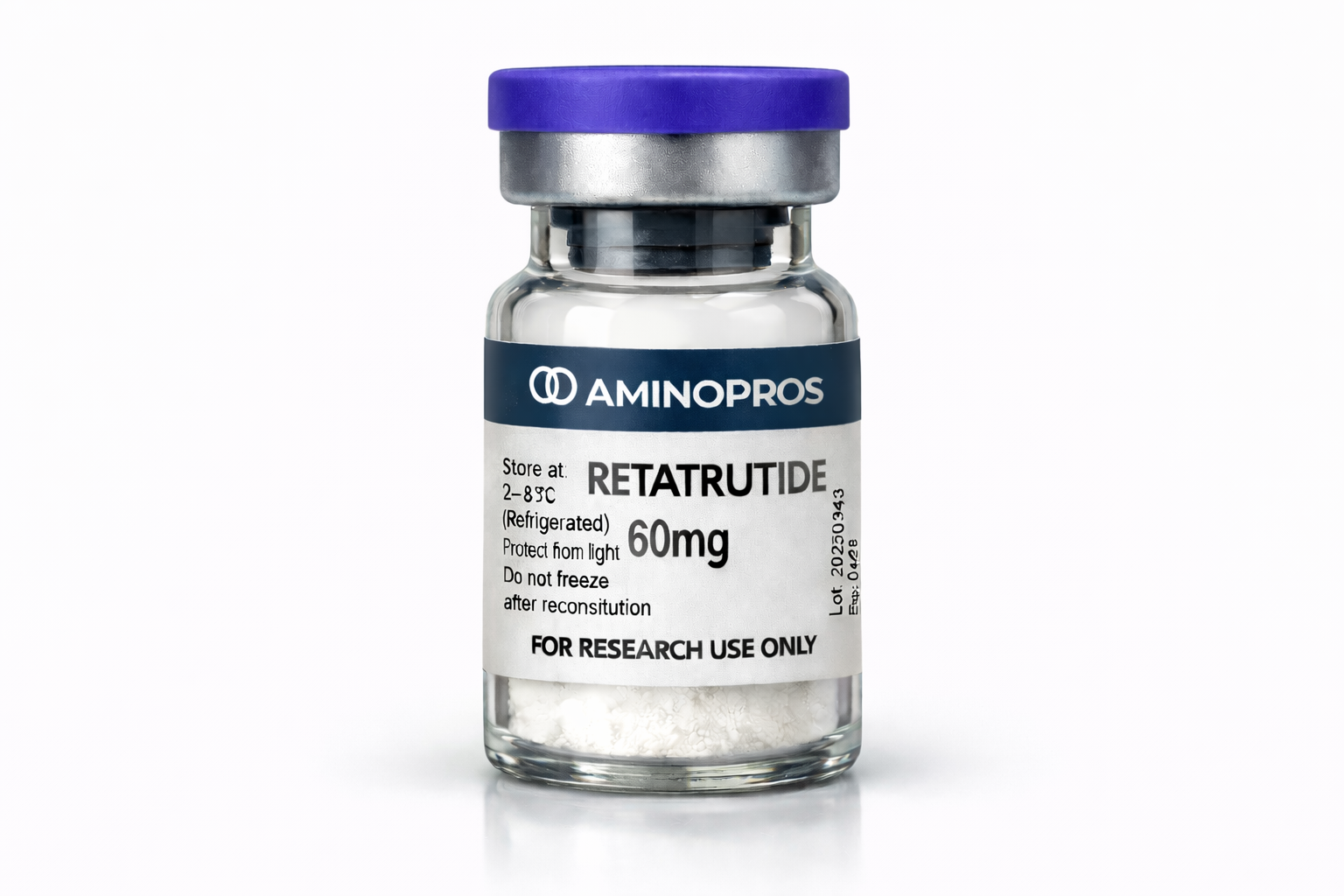
Retatrutide research peptide is a triple-agonist laboratory compound studied for its interaction with GLP-1, GIP, and glucagon receptor systems, with research focused on metabolic signaling, energy regulation, and appetite-related biological pathways under controlled experimental conditions.
For Research Use Only
Retatrutide
Lyophilized peptide • Laboratory research material • Not for human or veterinary use
Retatrutide research overview
Retatrutide research peptide is a multi-receptor agonist compound designed for laboratory studies involving GLP-1, GIP, and glucagon receptor signaling pathways. This triple-pathway interaction makes Retatrutide highly relevant in controlled research environments focused on energy expenditure systems, metabolic regulation, and appetite-related signaling frameworks.
In laboratory models, Retatrutide research peptide is commonly evaluated for its role in glucose metabolism, lipid regulation, and body composition signaling pathways. By engaging multiple receptor systems simultaneously, Retatrutide allows researchers to observe coordinated biological responses across interconnected metabolic networks rather than isolated single-pathway activity.
Research interest in Retatrutide continues to expand due to its relevance in incretin-based signaling systems, adaptive metabolic response models, and energy balance regulation. These structured laboratory environments provide insight into how combined receptor activation may influence complex biological processes under repeatable experimental conditions.
The lyophilized presentation of Retatrutide research peptide supports stable storage, precise handling, and consistent preparation, making it suitable for laboratory workflows requiring reproducibility and controlled experimental design.
Key Research Points
- Triple agonist studied for GLP-1, GIP, and glucagon receptor interaction
- Explored for metabolic rate, energy expenditure, and signaling pathways
- Investigated in appetite-related and lipid metabolism research models
- Relevant in incretin-based multi-pathway biological studies
- Supports structured laboratory research involving metabolic systems
Retatrutide laboratory applications
Retatrutide research peptide is widely utilized in laboratory environments focused on metabolic pathway analysis, energy system regulation, and multi-receptor biological response models. These applications allow researchers to evaluate how triple-agonist compounds behave across interconnected signaling environments.
It is also studied in research involving glucose regulation systems, body composition frameworks, and appetite signaling pathways. These models help investigators observe how multiple receptor systems interact within a single experimental design under controlled conditions.
Because Retatrutide engages GLP-1, GIP, and glucagon pathways, it supports advanced investigation into compound synergy, receptor coordination, and metabolic signaling integration across structured research protocols.
Extended Retatrutide research notes
Additional research involving Retatrutide research peptide includes evaluation of energy homeostasis, nutrient signaling pathways, and adaptive metabolic frameworks. These controlled environments allow researchers to better understand how multi-agonist compounds influence coordinated biological responses over time.
Studies also examine Retatrutide in relation to receptor timing, signal integration, and biological response efficiency across extended experimental timelines. This is particularly relevant in models where multiple pathways must be analyzed simultaneously.
In advanced laboratory settings, Retatrutide research peptide is incorporated into structured protocols evaluating metabolic flexibility, cellular energy distribution, and system-wide biological signaling. These models contribute to a deeper understanding of incretin-related pathways in controlled research environments.
The standardized lyophilized format ensures consistent preparation, accurate measurement, and reliable integration into laboratory workflows where precision and reproducibility are essential for high-quality research outcomes.
Form
Lyophilized Powder
Appearance
White to off-white lyophilized powder
Storage
Refrigerate 2–8°C or store below 25°C dry
Category
GLP/GIP/Glucagon Research Compound
Disclaimer: For laboratory research use only. Not approved for human or veterinary use.
Ongoing research involving Retatrutide research peptide continues to explore its role in multi-receptor metabolic coordination, energy distribution systems, and integrated signaling pathways. These structured laboratory models allow for deeper evaluation of how GLP-1, GIP, and glucagon receptor activity may interact within complex biological environments, supporting advanced research focused on metabolic efficiency, signaling precision, and adaptive response mechanisms across controlled experimental conditions.
Explore more compounds in our
research peptide collection.
For additional research context, review published studies on
PubMed.