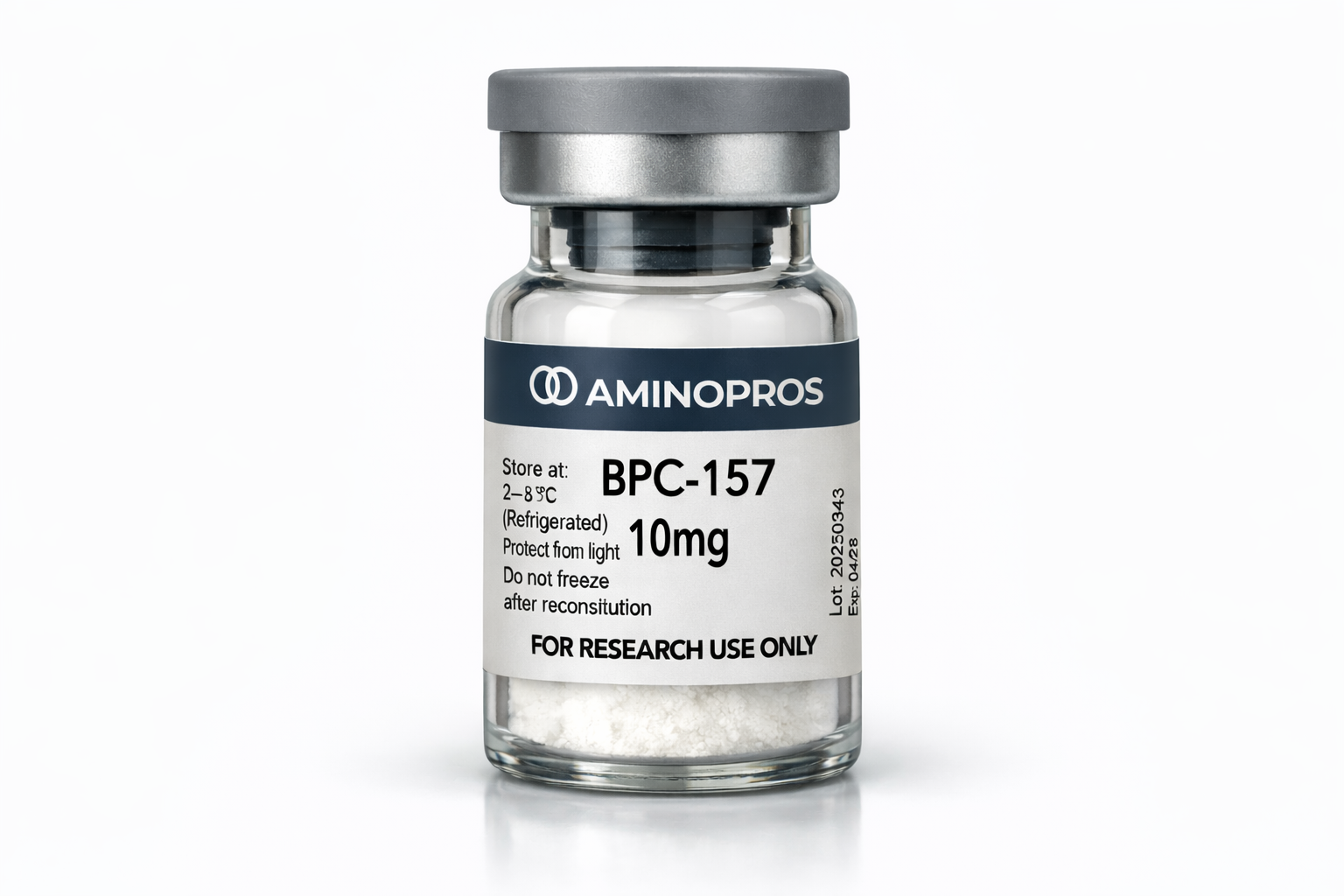
BPC157 10MG (J)
0Researcher Reviews
Rated 5 out of 5
$65.00
Third-Party Verified Test Report
This product has been independently analyzed for identity and purity.
BPC-157 10mg is a lyophilized peptide research compound studied in laboratory environments for its role in tissue signaling, angiogenic activity, and cellular response pathways under controlled experimental conditions.
For Research Use Only
BPC-157 10mg
Lyophilized peptide • Not for human or veterinary use
BPC-157 10mg (Body Protection Compound-157) is a synthetic peptide fragment derived from gastric protein sequences and studied extensively in laboratory settings for its role in tissue signaling pathways, inflammation modulation models, and angiogenic research environments. Experimental interest in this peptide has expanded across multiple research categories involving structural recovery, cellular communication, and biological adaptation under controlled conditions.
In research literature, BPC-157 10mg is commonly evaluated for its potential influence on fibroblast activity, nitric oxide-related signaling, and vascular response pathways. These areas are especially relevant in studies focused on tendon, ligament, muscle, and gastrointestinal research models where investigators seek to better understand peptide-driven repair mechanisms and structural support systems.
The lyophilized format of BPC-157 10mg supports laboratory stability, controlled storage, and repeatable preparation across structured research protocols. This makes it well-suited for analytical environments where consistency, handling precision, and reproducibility are important for evaluating compound behavior over time.
Ongoing laboratory investigations involving BPC-157 10mg frequently explore how the compound interacts with cellular regeneration pathways, cytoprotective environments, and connective tissue signaling systems. These research models allow for deeper examination of how peptide compounds may influence structural responses in controlled experimental frameworks.
Key Research Points
- Peptide fragment studied for tissue and tendon regeneration models
- Explored in angiogenic and cytoprotective research environments
- May influence nitric oxide and fibroblast signaling pathways
- Commonly examined in connective tissue and gastrointestinal models
- Lyophilized format supports stable laboratory handling and use
Research Applications
BPC-157 10mg is utilized in laboratory environments focused on tissue repair research, vascular signaling analysis, and cellular recovery pathways. These research areas allow investigators to observe how peptide compounds behave within structured biological systems under repeatable experimental conditions.
It is also explored in studies involving musculoskeletal response models, cytoprotective activity, and angiogenesis-related signaling, providing insight into peptide interactions across layered biological frameworks. This makes BPC-157 10mg relevant for broad laboratory investigation where structural response and compound consistency are prioritized.
Research interest in BPC-157 10mg also extends into gastrointestinal and epithelial models, where peptide activity is evaluated within environments centered on barrier integrity, localized signaling behavior, and controlled recovery systems. These experimental areas contribute to a wider understanding of the peptide’s behavior across multiple tissue-related research settings.
Extended Research Notes
BPC-157 10mg continues to be investigated for its role in structured laboratory models involving cellular adaptation, biochemical signaling, and matrix-level interaction systems. Because of its broad research interest, it is often incorporated into longer study designs where reproducibility and standardized preparation are essential.
Researchers frequently include BPC-157 10mg in controlled experimental protocols analyzing wound-healing frameworks, tendon-related signaling systems, and peptide-mediated recovery models. These studies often focus on how peptide fragments may interact with cellular environments tied to regeneration, vascular function, and structural response.
In broader research contexts, BPC-157 10mg is also associated with experimental models involving cell migration, tissue remodeling pathways, and protein signaling dynamics. This has made the compound a continued subject of interest within peptide research environments emphasizing precision, repeatability, and controlled observation over multiple phases of testing.
The standardized vial format of BPC-157 10mg supports integration into organized research workflows where accurate measurement and consistent preparation are necessary. This contributes to reliable use across laboratory protocols designed around peptide stability, handling quality, and repeatable compound administration.
Form
Lyophilized Powder
Content
10mg per vial
Appearance
White to off-white lyophilized powder
Storage
Refrigerate 2–8°C or store below 25°C dry
Explore more research compounds in our peptide research collection.
For additional research background, review published literature on PubMed.
Disclaimer: For laboratory research use only. Not approved for human or veterinary use, ingestion, or medical applications.
Reconstitute using sterile technique under controlled laboratory conditions.
Reconstitute using sterile technique under controlled laboratory conditions.